A growing number of developers have become involved in the Hiero community. To visualise this shift, we have been developing community analytics at hiero-hackers/analytics.
Here are two charts that tell the story, and which we are excited to share.
Contributors are Growing
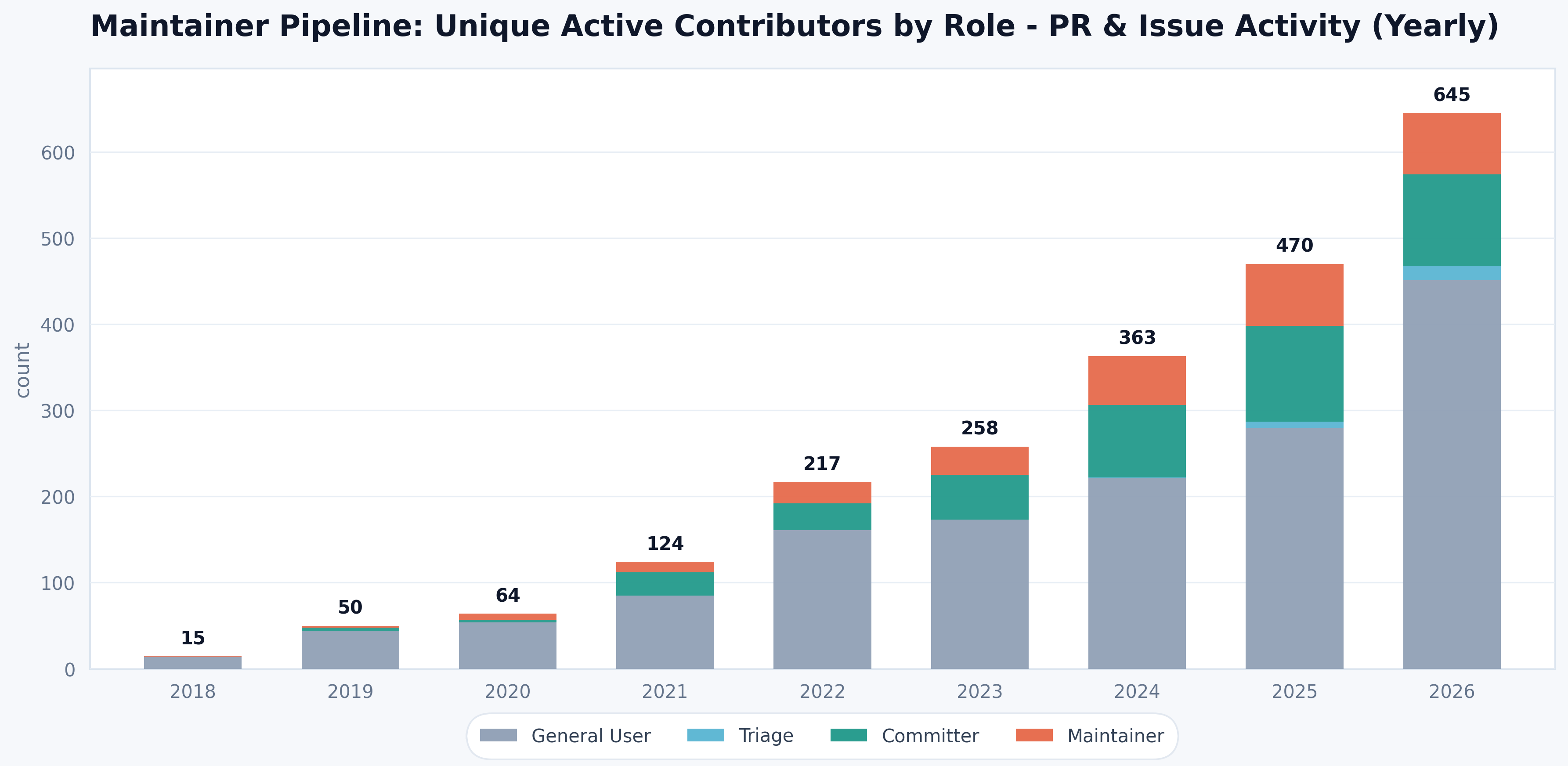 Active contributors by role, 2018–2026
This is the chart we are most excited about. It counts how many people were active on Hiero's GitHub each year — opening pull requests, filing issues, reviewing pull requests, or merging code — broken down by their role in the organisation.
Since Hiero and its repositories became open source in September 2024, the number of active contributors has grown from 363 in 2024 to 645 in 2026 — an increase of 78%. The biggest absolute change came from General Users: contributors without a formal role at Hiero who are contributing to the codebase and community, growing from around 220 in 2024 to roughly 450 in 2026. This is a testament to the passion of the community, the benefits of working in the open, and the stewardship of the Linux Foundation Decentralized Trust (LFDT).
We also wanted to highlight the Triage role. The triage team has grown roughly fivefold over the same period — from a handful of members in 2024 to around 20 by 2026. Triagers play a crucial role at Hiero: they are the first contact point for incoming issues and pull requests, and the role is the first step on the ladder to becoming a Committer or Maintainer. This suggests more community members are interested in contributing further, and are in training to take on more responsibility.
What we take from this: people often start by contributing casually, and over time some build a deeper interest in the project and take on more responsibility. Therefore, this chart is not only a sign of strong community growth — it also shows early signs of contributors taking on real responsibility at Hiero, and reflects the work existing Maintainers and Committers are doing to open up issues to new contributors.
Issues are getting easier to navigate
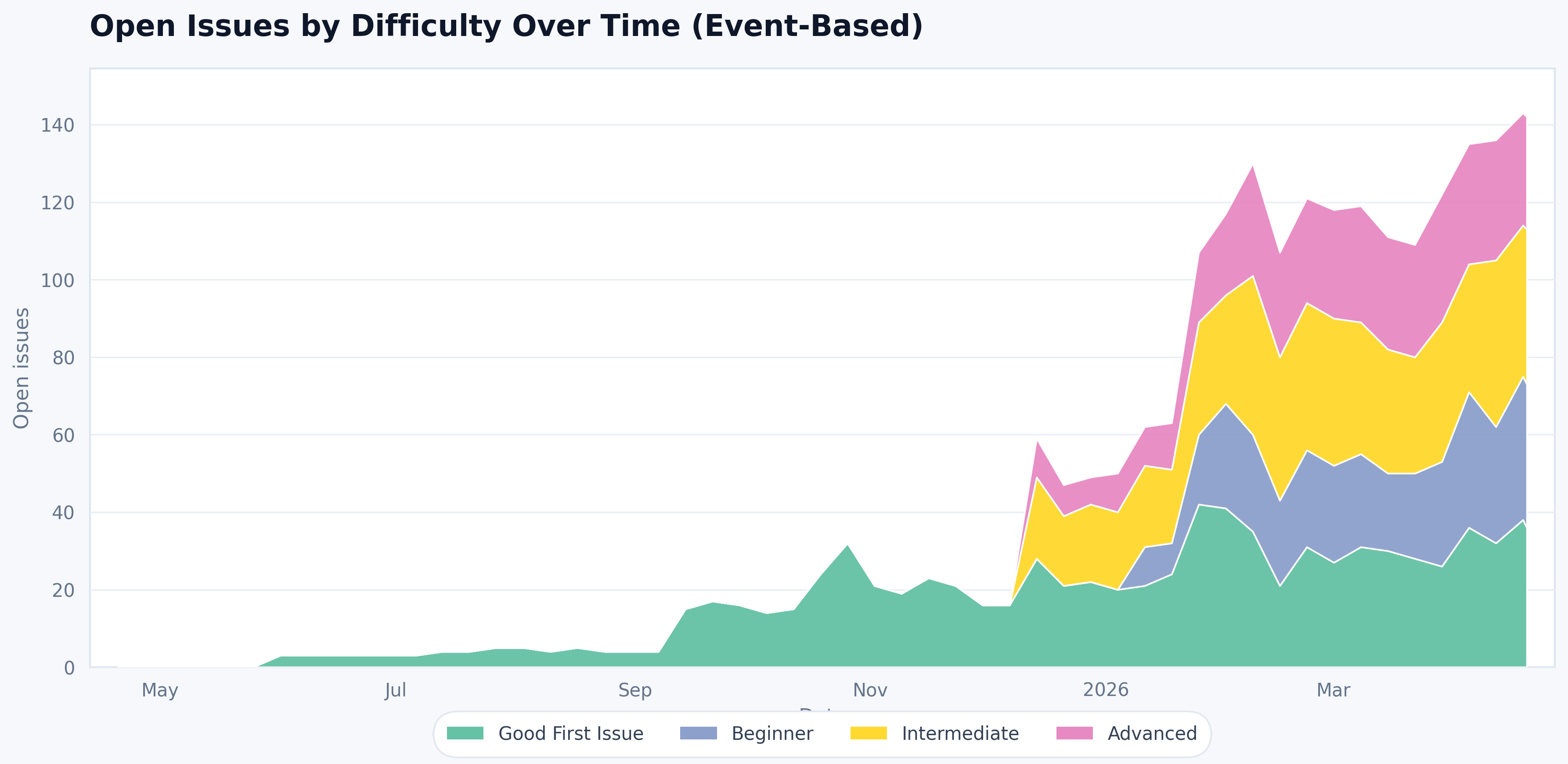 Open issues by difficulty label over time
One of the things that makes an open-source project welcoming is being able to find an issue that matches your skill level. This chart counts open issues at Hiero from the moment they are labelled as Good First Issue, Beginner, Intermediate or Advanced.
In June 2025, some repositories at Hiero began publishing Good First Issues. We quickly learned there was overwhelming interest in contributing to them, and that the community wanted to contribute more meaningfully beyond this entry level. Since December 2025, Maintainers across several Hiero repositories have been building the automations and documentation needed to support a wider wave of new contributors. As part of this, we have piloted three further categories — Beginner, Intermediate, and Advanced — and many of Hiero's open issues are now tagged by difficulty.
A few things stand out:
- Hiero has a diverse mix of issues. Open issues are spread across Good First Issue, Beginner, Intermediate, and Advanced.
- Labelling by difficulty continues to grow. From around 60 labelled issues in December 2025, we have reached roughly 140 by May 2026.
- Around 35–40 Good First Issues are open right now.
This tells us Maintainers at Hiero are being intentional about leaving the door open for new contributors, and are looking for help across a wide range of issues. If you've been thinking about getting involved, now is a good time.
A quick caveat: this chart only counts open issues that have a difficulty label — not every open issue across Hiero. The total number of open issues is much higher: we estimate over 500. The chart also does not tell us which of these issues are already assigned.
Want to get involved?
If you'd like to start contributing, the easiest place to begin is by browsing issues tagged good-first-issue across the Hiero repos.
The charts above come from our community analytics work at hiero-hackers/analytics. If you're curious about the data, or want to help improve the tooling, add new charts, or pitch in on labelling issues — the repo is open and we'd love the help.